
Most people begin health journeys with genuine excitement. However, that excitement fades fast when results do not appear quickly. You start Monday with the best intentions; you download a fitness app, buy a green smoothie, and swear this time will be different. Then Thursday arrives. The smoothie sits forgotten in the fridge. The app collects digital dust on your phone. According to research from the University of Scranton, only 8% of people actually achieve their New Year’s resolutions. That number is sobering, but it also tells us something important.
Lasting health does not require a dramatic overhaul of your entire life. It does not demand perfection either. Instead, it simply asks for small, consistent habits that you build steadily, day after day.
Common reasons people quit include unrealistic expectations, extreme diets, lack of time, and quickly vanishing motivation. These obstacles are real. However, they are also completely beatable.
This article walks you through every step of building a healthy lifestyle that genuinely sticks. You will learn how to assess where you currently stand, set goals that actually work, eat well without obsessing, move your body joyfully, sleep deeply, and protect your mental health. Most importantly, you will discover how to make it all last.
Building a healthy lifestyle is not about perfection. It is about creating habits you can proudly maintain for years to come.
What a Healthy Lifestyle Really Means

Many people believe healthy living means eating salads and dragging yourself to the gym every morning. That view misses the bigger picture entirely.
True healthy living covers every meaningful part of your life. Physical health matters enormously, yes. However, mental well-being, emotional balance, sleep quality, stress management, and even your relationships all shape how healthy you really are.
The World Health Organization defines health as a state of complete physical, mental, and social well-being, not merely the absence of disease. Therefore, chasing a perfect diet while neglecting sleep, stress, or joy is not healthy living. It is just selective discipline wearing a health costume.
Temporary health trends promise fast and dramatic results. Crash diets, 30-day challenges, and extreme cleanses all share one fundamental problem. They are simply not designed to last. Consequently, most people rebound quickly after trying them, often feeling worse than before.
Sustainable lifestyles, on the other hand, grow slowly and steadily like a strong tree. Balance matters far more than extremes. You can genuinely enjoy a slice of birthday cake and still live a vibrantly healthy life.
Furthermore, consistency over months beats intensity over days every single time. Think of your health as a long and beautiful journey, not a frantic sprint to an imaginary finish line.
Assess Your Current Lifestyle Habits

Before you change anything at all, you need to understand where you currently stand. Self-awareness creates a powerful and honest foundation for lasting change.
Start with your eating habits. What do you typically eat each day? Are your portion sizes realistic? Do you drink enough water? Most adults need around 8 glasses of water daily, according to the U.S. National Academies of Sciences.
Next, look honestly at your physical activity level. How much do you actually move each day? Many people sit for 8 to 10 hours daily without realizing it at all. The CDC recommends at least 150 minutes of moderate physical activity per week for adults.
Then examine your sleep patterns carefully. What time do you actually fall asleep? How many hours do you get on a typical night? Adults need 7 to 9 hours of quality sleep per night, according to the National Sleep Foundation.
Also, pay close attention to stress and mental wellness. Do you feel overwhelmed frequently? Do you take meaningful breaks or practice any form of relaxation?
Finally, acknowledge any harmful habits you carry. Skipping meals, excessive sugar intake, physical inactivity, and poor sleep all quietly chip away at your health over time.
Honest self-assessment is never about shame. It is about gaining the clarity you need to make genuinely better choices going forward. Once you understand clearly where you are, you can begin creating realistic and achievable goals.
Set Small and Realistic Health Goals

Large goals feel wonderfully inspiring in the moment. However, they often collapse under their own enormous weight. “I want to be healthier” means everything and nothing at the same time.
Instead, set SMART goals. SMART stands for Specific, Measurable, Achievable, Relevant, and Time-based. This widely trusted framework turns vague wishes into real, actionable steps.
For example, instead of saying “I want to exercise more,” try this instead. Commit to walking for 20 minutes every morning for the next two weeks. That goal is specific, measurable, and genuinely achievable.
Similarly, rather than declaring “I want to eat better,” say something concrete. Add one vegetable to your lunch every single day this week. Small wins like these build remarkable momentum over time.
Habit stacking is another powerful and practical tool. It links a new habit directly to an existing one you already do. For instance, after you brush your teeth each morning, you drink a full glass of water immediately afterward. The existing habit becomes a natural trigger for the new healthy one.
Additionally, celebrating small wins matters far more than most people realize. Each small success trains your brain to associate healthy actions with positive and rewarding feelings. Over time and with consistency, your habits become wonderfully automatic.
Gradual and steady progress beats dramatic and sudden change every single time. Start with just one or two small goals. Then build naturally from there as each habit becomes second nature to you.
Create Healthy Eating Habits You Can Maintain
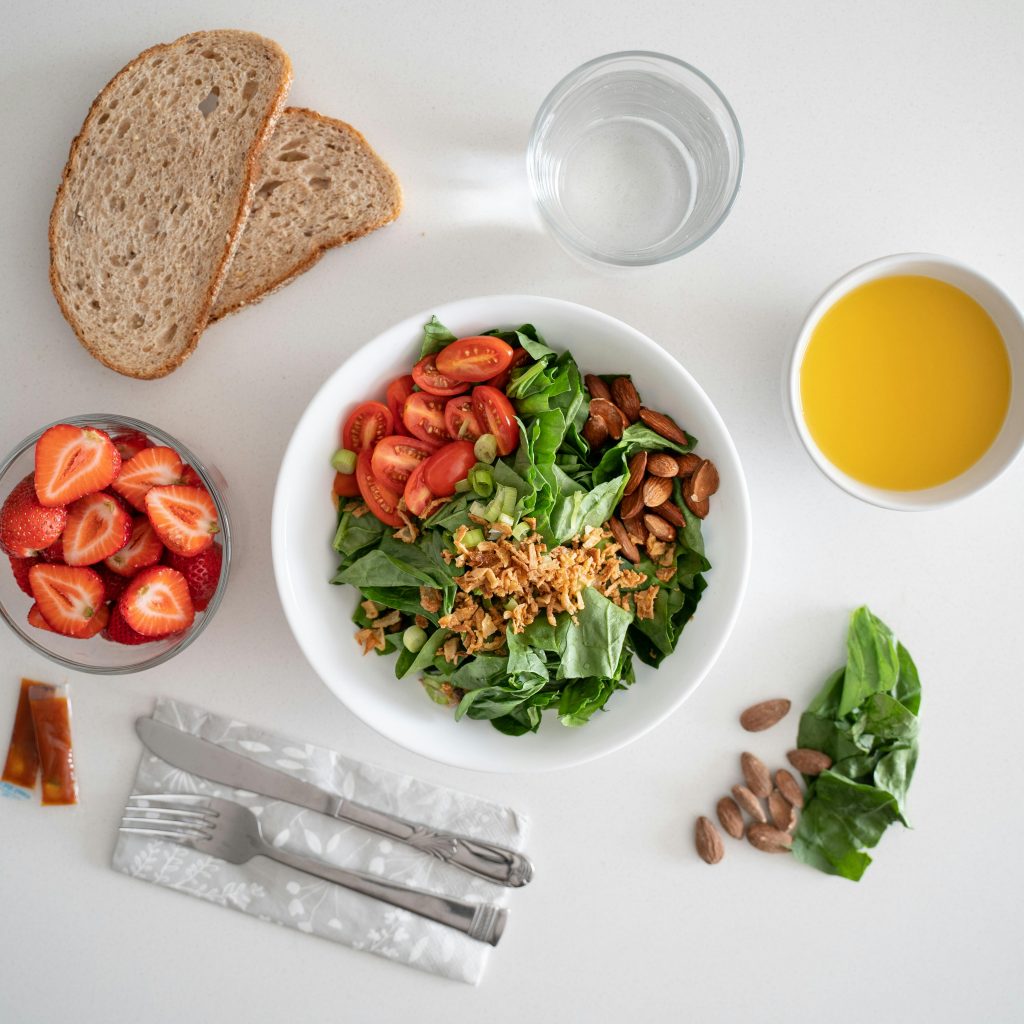
Focus on Balance, Not Restriction
Forget everything you have ever heard about forbidden foods. Healthy eating is fundamentally not about punishment. It is about nourishing your body with balance and genuine intention.
A well-rounded daily diet includes fruits, vegetables, lean proteins, healthy fats, and whole grains. The Harvard T.H. Chan School of Public Health recommends filling half your plate with fruits and vegetables at every single meal.
Moreover, strict restriction often backfires in a painful way. Research consistently shows that people on highly restrictive diets tend to overeat dramatically when they eventually break those rigid restrictions. This exhausting cycle is completely unsustainable over time.
Practical Tips for Daily Eating
Portion control matters a great deal, but it does not need to feel clinical or complicated. Simply use smaller plates, eat slowly and mindfully, and stop eating when you feel comfortably satisfied rather than uncomfortably stuffed.
Meal planning genuinely saves time and reduces the temptation of grabbing unhealthy fast food options. Even planning just three dinners per week makes a noticeable and real difference. Furthermore, cooking at home regularly helps you control both ingredients and portions in a completely natural way.
Reduce processed foods gradually rather than cutting them out all at once. Start by swapping one processed snack for a whole food option each day. Therefore, the change feels wonderfully manageable instead of overwhelming and punishing.
Hydration also plays a surprisingly huge role in healthy eating habits. Sometimes thirst actually masquerades convincingly as hunger. Drinking a glass of water before meals can reduce unnecessary and mindless snacking significantly.
Healthy Eating on a Budget
Healthy eating absolutely does not require expensive superfoods or fancy subscription meal kits. Beans, lentils, eggs, frozen vegetables, oats, and seasonal produce are all affordable and deeply nutritious everyday foods.
Additionally, always avoid the all or nothing mindset around food. One unhealthy meal does not ruin your health progress at all. What truly matters is your overall pattern of choices, not a single moment of indulgence.
Make Physical Activity Part of Daily Life
Movement Should Feel Like Joy, Not Punishment
Exercise absolutely does not mean suffering through a gym session you secretly dread every single time. Movement should energize you and lift your spirit, not drain them both completely.
The key is finding physical activities you genuinely and consistently enjoy. Walking, dancing, cycling, stretching, swimming, strength training, and simple home workouts all count as fully valid and beneficial exercise. If you love what you do, you will naturally keep doing it for years.
Start Small and Build Consistency
Start with just 10 minutes of enjoyable movement daily. That sounds almost too easy to matter. However, beginning small removes the significant mental barrier that stops most people before they even take a single step.
As you build genuine consistency, gradually increase your duration and intensity. After two weeks of 10-minute walks, extend them comfortably to 20 minutes. Then try adding a light stretching session in the evenings. Progress happens beautifully and naturally when you refuse to rush it.
Reducing sitting time throughout your day also makes a real and measurable difference. Set a simple reminder to stand and stretch every hour if you work at a desk. Furthermore, take the stairs whenever possible, walk while on phone calls, or park a little further from your destination and walk the rest.
Overcoming Exercise Excuses
Busy schedules are absolutely real and valid. However, three 10-minute walks scattered across your day add up to 30 full minutes of beneficial activity. You simply do not need a full hour block or an expensive gym membership to stay meaningfully active.
Research from the British Journal of Sports Medicine confirms that even short bouts of movement throughout the day deliver truly significant health benefits for the body and mind.
Prioritize Quality Sleep Every Day

Sleep is not a sign of laziness. Sleep is genuinely powerful medicine for your entire body and brain.
Quality sleep actively supports your energy levels, immune system, mood, mental focus, and even your weight management efforts. The CDC reports that one in three American adults does not get enough sleep on a regular basis.
Sleep deprivation significantly raises the risk of heart disease, diabetes, obesity, and depression over time. Therefore, protecting your sleep is just as critically important as protecting your diet and exercise habits.
Building healthy sleep habits starts with a consistent daily schedule. Go to bed and wake up at the same time every day, including weekends. Your body’s internal clock genuinely thrives on predictable routine.
Additionally, reduce screen time at least 30 minutes before you climb into bed. Blue light emitted from phones and laptops actively suppresses melatonin, the natural hormone that signals your body it is time to sleep.
Create a calming and intentional bedtime routine that works for you personally. Reading, light stretching, prayer, or journaling all signal your body and brain that rest time has arrived. Also, avoid caffeine after 2 PM, since caffeine can remain active in your system for up to 6 full hours.
Protect Your Mental and Emotional Health
Your mind and your body are not separate systems living parallel lives. They influence and shape each other constantly and profoundly.
Chronic unmanaged stress raises cortisol levels, disrupts sleep patterns, weakens your immune system, and increases the risk of serious heart disease. The American Psychological Association confirms that unmanaged stress directly and measurably damages physical health over time.
Therefore, managing your stress is not an optional luxury. It is a fundamental health necessity.
Simple and accessible stress management techniques work remarkably well when practiced consistently. Prayer and meditation both reduce anxiety and sharpen mental focus noticeably. Journaling helps you process difficult emotions and gain genuine clarity about your life. Deep breathing activates your parasympathetic nervous system, which calms your body almost instantly and naturally.
Hobbies also protect your mental health in a powerful and underrated way. Cooking, painting, gardening, reading, or playing music all provide healthy and joyful outlets for daily stress. Furthermore, they bring genuine happiness into your life, which is itself deeply therapeutic and healing.
Healthy and supportive relationships matter enormously too. Surrounding yourself with positive and caring people reduces emotional burden significantly over time. Additionally, setting clear personal boundaries protects your precious energy from unnecessary and exhausting drain.
Take regular breaks throughout your busy day without guilt. Your brain needs genuine rest just as much as your muscles do after a workout. Signs of burnout include persistent exhaustion, growing cynicism, reduced productivity, and emotional detachment from people you care about. If you recognize these signs in yourself, address them promptly rather than simply pushing through.
Practice gratitude every single day. Research shows that people who write down three things they feel grateful for each day consistently report higher happiness levels and lower stress.
Build Habits That Stick Long-Term
Motivation is genuinely unreliable. It comes and goes freely like the weather, completely beyond your control. Systems and routines, however, keep you moving steadily forward even when motivation completely disappears.
Creating a solid daily routine removes the exhausting need for constant decision-making throughout your day. When healthy actions become automatic and familiar, they require far less mental energy to perform. James Clear, author of the bestselling book “Atomic Habits,” explains that habits account for roughly 40% of all human daily behaviors.
Track your progress consistently and visibly. Use a habit tracker app, a simple paper journal, or even a wall calendar with satisfying daily checkmarks. Watching your streak grow day by day creates powerful and genuine positive reinforcement in your brain.
Remove obstacles from your immediate environment proactively. Place fresh fruit on your kitchen counter instead of chips. Keep your walking shoes right by your front door. Prepare your gym clothes the night before so morning feels effortless. Your environment shapes your daily behavior more powerfully than willpower alone ever can.
Accountability builds consistency remarkably well in almost every person. Share your health goals openly with a trusted friend, join a local fitness group, or find an active online community with shared values and similar goals. Furthermore, research consistently shows that people who report progress to others follow through at significantly higher rates.
Identity-based habits are perhaps the most transformative approach of all. Instead of saying “I am trying to exercise regularly,” say this instead: “I am someone who moves their body joyfully every day.” This powerful shift in identity makes each healthy habit feel like a genuine expression of who you truly are, rather than just another item on your endless to-do list.
Common Mistakes That Prevent Lasting Healthy Habits
Even genuinely well-intentioned people fall into the exact same traps repeatedly. Recognizing these pitfalls honestly is your first step toward avoiding them completely.
Trying to change absolutely everything at once is the single most common and costly mistake. Overhauling your diet, sleep, exercise, and stress management all simultaneously overwhelms your brain and willpower. As a result, most people abandon everything within just a few discouraging weeks.
Following trendy and viral diets is another significant trap worth avoiding. Keto, juice cleanses, and social media detox plans all grab attention powerfully and quickly. However, most lack solid scientific backing for long-term use and create restrictions that no real person can sustain happily.
Comparing your progress to others quietly destroys your motivation over time. Someone else’s fitness journey began at a completely different starting point, with different resources, different support systems, and different genetics. Therefore, your only truly valid comparison is the version of yourself from yesterday.
Perfectionism causes tremendous damage to health journeys. Many dedicated people quit entirely after just one imperfect day or one bad meal. However, one missed workout or one indulgent meal does not erase weeks or months of genuine and meaningful progress. Progress is never perfectly linear for anyone.
Ignoring mental health while focusing exclusively on physical habits creates a fundamental imbalance that eventually collapses under its own weight. Consequently, addressing emotional well-being alongside physical routines always produces far more durable and satisfying long-term results.
Relying solely on motivation rather than building solid systems and consistent routines leaves you completely vulnerable to quitting during life’s inevitably difficult seasons. Build structures that carry you forward faithfully when your feelings temporarily fail you.
Your Health Journey Starts Today, Not Monday
You now hold a complete and practical roadmap in your hands; you understand what a truly healthy lifestyle looks like in every dimension of life, you know how to honestly assess where you currently stand, and you have learned how to set goals that actually work in the real world, with your real schedule and your real life.
Start small and start today. Focus on consistency above all else because consistency is genuinely everything. Prioritize balance over exhausting perfection in every choice you make. Care for both your physical and your mental health with equal and unwavering devotion every single day.
Build routines that carry you forward even through the days when willpower completely runs dry and motivation feels impossibly far away.
Healthy living is not a destination you reach and then finally rest at. It is a beautiful lifelong journey that grows and evolves right alongside you. Some seasons will feel wonderfully effortless and joyful. Others will feel genuinely hard and discouraging. Both kinds of seasons are completely normal and fully part of the journey.
The most important step is simply the very next small one. Not the perfect plan, the ideal Monday, and not the right equipment or the perfect gym or the absolutely right time. Just the very next small and honest action you can take right now.
Therefore, drink a tall glass of water right now. Take a short walk this evening before it gets dark. Sleep an extra 30 minutes tonight and notice how different tomorrow morning feels. These small and simple acts compound quietly but powerfully into a life that feels genuinely vibrant, joyful, and deeply and fully alive.
You are not trying to become an entirely different person, but you are simply and beautifully becoming a healthier, stronger, and more vibrant version of the incredible person you already are. And that journey is absolutely worth every single step forward.
Recommended Reading: 10 Health Habits That Boost Your Energy Naturally