In cities and villages around the world, from Lagos to London, Kigali to Karachi, young women full of ambition are launching businesses that could transform their lives and communities. Yet despite courage and creativity, too many women entrepreneurs hit a wall — not because their ideas lack value, but because the system is stacked against them. At the heart of this inequality lies unequal access to finance and essential resources.
This isn’t just a problem for women — it’s a societal problem. When half of our population is held back from participating fully in business and innovation, our economies shrink and our societies lose out on potential growth, employment, and social progress.
This article lays out the issue clearly, backs ideas with research and stories, and delivers real solutions that young people and society can act on — now.
Why Access to Finance Matters — For Everyone
Finance is the lifeblood of entrepreneurship. Without capital to start or grow a business, even the best ideas struggle to survive. Yet countless studies show that women face persistent barriers to finance.
According to the OECD, women entrepreneurs are about half as likely as men to report that they have borrowed funds from a bank to start, operate, or expand a business. This gender gap exists across most countries and sectors.
Moreover, businesses led by women receive only a tiny fraction of total venture capital investment — often estimated at around 2% globally — despite often performing as well or better than male-led firms when funded.
In Africa specifically, the International Finance Corporation estimates a financing gap of roughly $42 billion for women entrepreneurs, with women receiving only a small share of formal finance.
In Nigeria, for instance, despite women owning nearly 40 % of small and medium enterprises, only about 15 % of these businesses receive formal credit from banks and financial institutions.
These numbers reveal more than statistics — they show a system that systematically disadvantages women, not because of ability or talent, but because of structural barriers in finance and resource access.
Barriers Women Entrepreneurs Face
1. Gender Bias in Lending and Investment
Women encounter bias at every stage of finance. Gender stereotypes influence risk assessment and credit decisions, resulting in women being asked for higher collateral, higher interest rates, or being denied altogether.
Investors are disproportionately male, and unconscious bias can lead to women’s pitches being scrutinized more harshly or misunderstood — forcing many women to self-fund or delay scaling their business.
A survey of female founders showed that nearly one in three women feel they aren’t taken seriously by investors, with 22 % citing limited access to funding as a major problem.
2. Lack of Collateral and Financial History
Many women entrepreneurs, especially in low-income regions, cannot provide traditional collateral such as property, because of legal and cultural restrictions around land and asset ownership.
Even when they do, banks often require stricter criteria for women, meaning their loan applications are more frequently rejected. This absence of formal credit history further weakens their ability to access larger capital.
3. Limited Financial Literacy and Networks
Accessing finance isn’t just about banks saying “yes” or “no”. Successful borrowing — especially from formal institutions — requires financial understanding, confidence, and networking skills.
Studies show that women entrepreneurs often have smaller business networks and receive less mentoring than men, which reduces opportunities to connect with investors or partners.
Young entrepreneurs, regardless of gender, need networks to succeed — but women statistically have less access to high-value networking spaces. This disadvantage compounds over time.
4. Socio-Cultural Constraints
In many societies, social norms still dictate that women bear a disproportionate burden of household responsibilities. Time poverty — where women juggle family care and business roles — diminishes time available for meetings, networking, and travel — all critical for business growth.
5. Digital and Technological Gaps
The modern economy rewards digital tech — from online marketing to fintech solutions. Yet women often lack equal access to digital tools and training, further widening the resource gap.
Real Stories: What Works — And What Doesn’t
Positive Examples: What Success Looks Like
Mahila Money (India)

Mahila Money is a fintech platform that provides micro-loans and financial education tailored for women, especially those without prior access to banking. By pairing small loans with skills training, it empowers women to start and grow businesses.
Why this works:
- It meets women where they are — no large collateral needed.
- It provides education alongside finance, building confidence.
- It uses technology to widen reach.
Goldman Sachs 10,000 Women and Women Entrepreneurs Opportunity Facility
Since 2008, this education and financing program has trained more than 200,000 women and helped over 164,000 women access loans totaling more than $4.5 billion across 55 countries.
Why this works:
- It combines business education with access to formal bank loans.
- It builds networks and confidence.
- It shows that if capital is made available in the right way, women succeed.
MamaMoni (Nigeria)
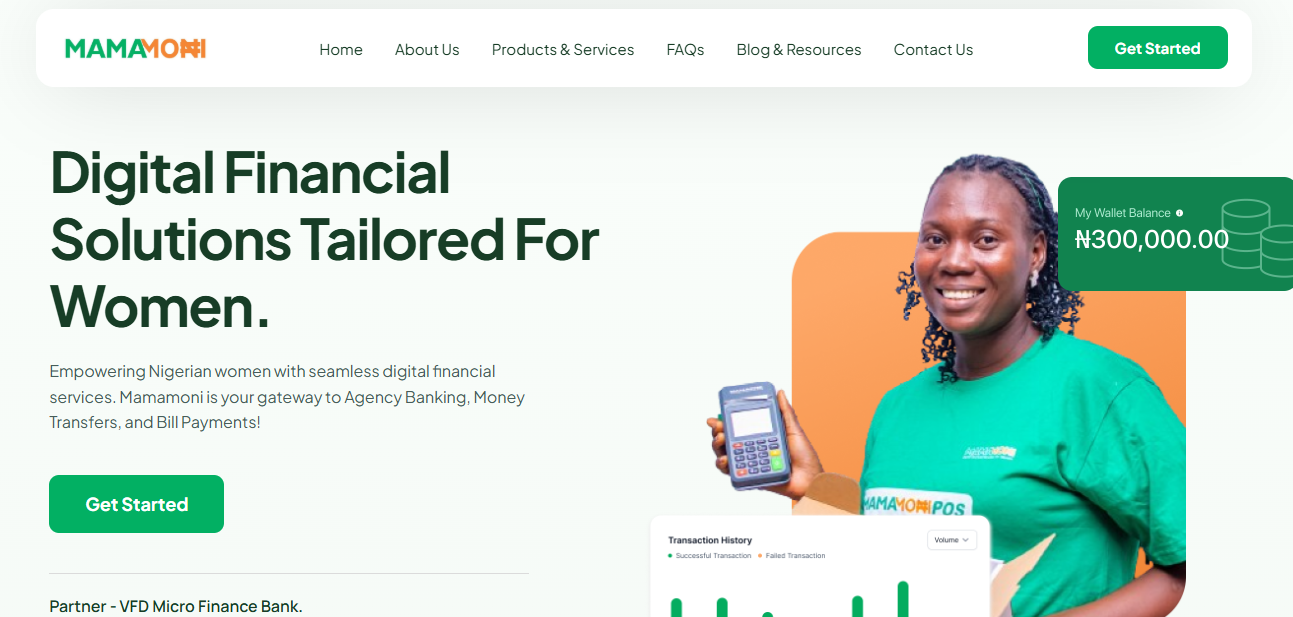
MamaMoni provides digital financial services and agent networks that specifically serve women in underserved communities, offering loans, digital skills training, and healthcare support.
Why this works:
- It focuses on underserved segments rather than “elite” entrepreneurs.
- It combines financial access with practical support systems.
What Doesn’t Work (and Why)
One-Size-Fits-All Banking Solutions
Traditional bank lending often treats all borrowers the same — ignoring the fact that women’s businesses tend to be smaller, earlier-stage, or in sectors that banks misconstrue as “higher risk”. This leads to repeated rejection even for viable women-led businesses.
Ignoring Financial Education
Providing capital without education can lead to poor financial management, debt problems, or business failure. A program that ignores financial literacy is like handing someone tools without teaching them to use them.
Neglecting Networks and Mentorship
Money alone is not enough. Without mentors, markets, and connections, women often run in circles trying to figure out business growth on their own. Programs that don’t build these social and professional networks fail to unlock women’s full potential.
Concrete Solutions — What Must Be Done
Solving the unequal access problem requires coordinated action across policy, institutions, communities, and individuals.
1. Re-Design Financial Products for Women
Banks and fintech companies need financial products designed with women in mind — low collateral requirements, flexible payment terms, and smaller initial loan sizes that match women’s business realities.
Financial inclusion research shows that women apply less often for loans partly because they assume they will be rejected — so products must be accessible and de-stereotyped from the start.
2. Promote Women-Centric Financial Education
Government agencies, NGOs, and youth groups must deliver financial literacy programs that teach budgeting, credit history building, digital finance, and investment readiness.
When women understand finance deeply, they negotiate better deals, manage cash flow well, and pitch with confidence.
3. Build and Support Mentorship Networks
Young people can organize or join mentorship networks where experienced entrepreneurs guide new women founders. Organizations like Everywoman offer training, leadership programs, and networking opportunities worldwide.
Mentorship does more than impart knowledge — it builds confidence.
4. Encourage Public-Private Partnerships
Governments, banks, and private sector players must partner to scale initiatives like Women Entrepreneurs Opportunity Facility, MamaMoni, and community-based funds.
Policy incentives such as tax breaks for lenders who fund women businesses, or mandatory gender equity quotas in investment portfolios can accelerate change.
5. Expand Alternative Financial Models
Microfinance, cooperatives, and community savings groups have a proven track record of providing capital where banks won’t. These alternatives give women access to credit, savings, and peer support.
But they must be paired with regulation and oversight to avoid predatory lending practices and ensure fairness.
6. Promote Digital Financial Inclusion
Mobile banking, digital lending platforms, and online marketplaces can lower barriers significantly. Governments and tech companies should subsidize digital skills training for women and ensure affordable internet access.
Research shows digital finance reduces gender gaps in access to credit and increases bargaining power within households and markets.
7. Change Cultural Narratives
Society must challenge stereotypes that say women are less capable entrepreneurs. Community campaigns, schools, and media must highlight women founders, celebrate success stories, and encourage risk-taking and leadership among young women.
The Broader Impact: Why This Matters for Society
The benefits of empowering women entrepreneurs extend far beyond individual success.
Women reinvest a much larger portion of their income back into their families and communities — an estimated 90 % compared to 30-40 % for men.
This means better education for children, improved health outcomes, and stronger community resilience.
When women succeed, communities thrive.
Call to Action: What You Can Do Today
For Young People
- Support women-led businesses — buy from them, recommend them, elevate their work on social media.
- Join or create mentorship circles that connect experienced entrepreneurs with young founders.
- Build financial literacy early — take online courses, learn about finance, and support your peers.
For Society at Large
- Demand gender-responsive financial products from banks.
- Support policies that provide incentives for lenders and investors to fund women entrepreneurs.
- Champion equity in education — teach both boys and girls financial skills from school age.
For Governments and Institutions
- Scale programs like 10,000 Women, MamaMoni, and Count Me In, which offer capital, education, and networks.
- Invest in digital infrastructure and fintech ecosystems that foster inclusive finance.
Conclusion
Women entrepreneurs are change-makers, innovators, and community builders. Yet unequal access to finance and essential resources keeps too many dreams unrealized.
This isn’t just a women’s issue — it’s a societal loss when half of our innovators are stuck at the starting line.
The good news? Solutions exist. Financial products can be redesigned, education can be scaled, networks can be expanded, and cultural mindsets can shift.
But it requires your participation — young people, community leaders, policymakers, business owners, and everyday citizens.
So ask yourself: Who will benefit when you support a woman entrepreneur today? The answer is simple — us all.
Let’s act now.