Every outstanding leader you admire has one thing in common. They have fallen hard, picked themselves back up, and kept going. Now, here is the fascinating part. The most powerful thing they do with those lessons is pass them on to their children.
Resilience and grit are not skills you are born with. They are muscles you build, one challenging moment at a time. Research by psychologist Angela Duckworth shows that grit, defined as a combination of passion and perseverance for long-term goals, is a significant predictor of success. It is not natural talent or raw intelligence that matters most. It is the ability to keep going when everything inside you wants to stop.
So what exactly do successful leaders teach their children about this powerful combination? Grab a seat. This is the kind of lesson that changes lives.
Failure Is Not the End

Here is a truth that took many successful people years to accept. Failure is not the opposite of success. It is part of the path to success.
Oprah Winfrey grew up in poverty, survived childhood trauma, and was famously fired from her first television job for being “too emotional.” She did not crumble; she turned her wounds into wisdom, a phrase she now uses to inspire millions around the world. Today, Oprah imparts a profound lesson: do not dwell on missed opportunities. Thank them. Every rejection carries a redirection toward something better.
Michael Jordan was cut from his high school basketball team. J.K. Rowling’s Harry Potter manuscript was rejected almost a dozen times before a publisher said yes. These are not tales of defeat. They are proof that persistence outlasts rejection every single time.
Successful leaders teach their children to look failure in the eye and ask one question: “What can I learn from this experience?” That single shift, from shame to curiosity, is where grit is born. When you celebrate the lesson in the loss, failure stops being a dead end and becomes a detour.
Model the Behavior You Want to See

Children do not learn resilience from speeches. They learn it from watching you.
Resilient parents tend to raise resilient children. When you show your child how you handle a difficult day at work, a disappointing result, or a disagreement with a friend, you give them a live masterclass in emotional strength. You become the textbook they read every single day.
Elon Musk shares personal stories with his children about SpaceX rocket failures and Tesla’s early struggles. He does not hide those hard moments. Instead, he uses them as teaching tools to show his children that resilience is not about avoiding failure. It is about facing it, learning from it, and showing up again. His philosophy is straightforward: overcoming obstacles builds character, grit, and problem-solving skills.
Michelle Obama takes a similar approach. She actively encouraged her daughters, Malia and Sasha, to resolve their own conflicts without immediately stepping in. She gave them space to struggle, to feel the discomfort, and to find their own way through. That kind of deliberate parenting builds the emotional muscles children will need for the rest of their lives.
Furthermore, when you let your children see you bounce back with grace, you send them a message that no motivational poster ever could: “Hard things happen, and we are strong enough to handle them.”
Teach the Hard Thing Rule

Angela Duckworth, one of the world’s leading researchers on grit, introduced a concept called the Hard Thing Rule. The idea is beautifully simple. Every member of the family picks one hard thing they commit to sticking with. No one is allowed to quit on a bad day or allowed to walk away just because it feels uncomfortable.
The rule has three parts. First, everyone in the family must do a challenging thing, including the parents. Second, you are allowed to quit, but only at a natural stopping point, not in the middle of a rough patch. Third, and most importantly, no one else picks your challenging thing for you. You choose your own challenge.
This rule works so well because it combines two of the most powerful ingredients of grit: passion and perseverance. The child chooses what they care about, which fuels their passion. Then they commit to showing up, which builds their perseverance. Together, these two ingredients become the foundation of a resilient character.
Successful leaders apply this rule in their homes because they understand something deeply. The world will not be gentle with its children. Therefore, teaching them to do hard things in a safe environment prepares them for the real world.
Additionally, the Hard Thing Rule teaches children that discomfort is not danger. It is simply a signal that growth is happening.
Celebrate Effort, Not Just Results

Here is a habit that many parents unknowingly get wrong. They praise their children for being smart or talented, and without realizing it, they teach their children to fear failure. When your identity is tied to being “the smart one,” every mistake feels like a threat to who you are.
Successful leaders flip this completely. They celebrate the effort, the strategy, and the perseverance, not just the outcome. Telling your child, “I am proud of how hard you worked on that,” is one of the most powerful sentences in the English language. It teaches them that their value is not in being perfect. Their value is in showing up and trying their best.
Research shows that students who are gritty, disciplined, and ambitious consistently perform better in school than students who are simply intelligent but lack these qualities. In other words, drive beats natural talent every single time when it is paired with consistent effort.
Moreover, a study referenced in leadership research shows that an emotional response to failure, rather than brushing it off, actually leads to better performance the next time around. So when your child cries because they lost the spelling bee or did not make the school team, let them feel that disappointment. Do not rush past it. That emotion is fuel.
Because when you teach children to value progress over perfection, you raise people who are not afraid to try, fail, try again, and eventually win.
Let Them Struggle (Yes, On Purpose)
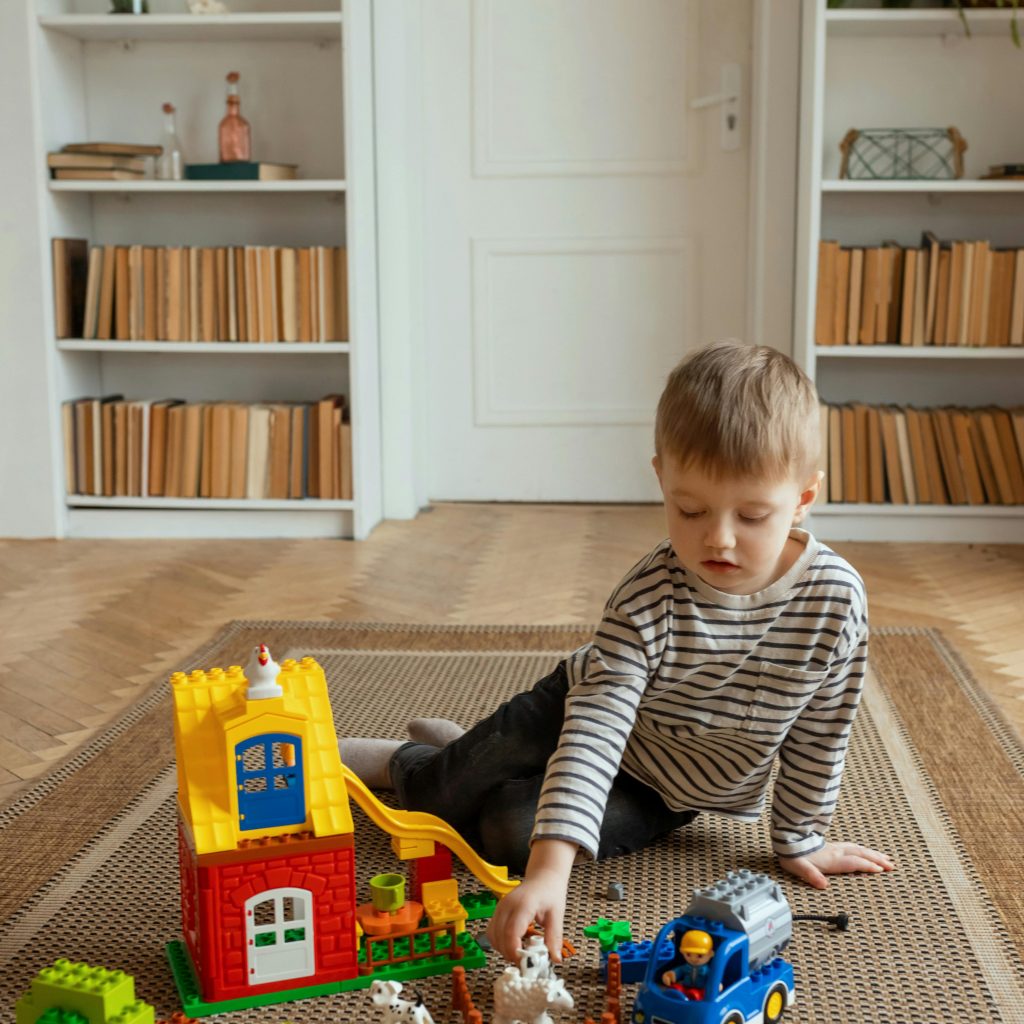
This one is the hardest lesson for any loving parent. However, it is also one of the most important.
Every time you solve a problem for your child before they even have the chance to try, you rob them of a growth opportunity. Resilience is not just about getting back up after falling. It is about learning why you fell, figuring out what to do differently, and getting back up with more knowledge than before. That process requires struggle. And struggle requires space.
CEO and leadership expert Brian de Haaff writes that teaching children to go after big goals means letting them face real competition, real disappointment, and real pressure. He notes that strong competitors teach children where they need to improve and how to adapt. The goal is not to shield children from discomfort. The goal is to prepare them for it.
Michelle Obama applied this directly in her parenting. She allowed her daughters to resolve their own conflicts instead of jumping in immediately. She also encouraged them to walk their own path and not let other people’s opinions, including hers, dictate who they should become. That level of trust gave her daughters the confidence to develop their own inner strength.
Similarly, Elon Musk believes that overcoming self-generated obstacles builds character and self-reliance. He does not manufacture fake challenges. He simply steps back and gives his children room to navigate real ones.
Furthermore, when children solve their own problems, they build a quiet confidence that no one can take away from them. They learn the most empowering truth there is: “I can figure this out.”
Teach Children to Manage Their Emotions

Grit without emotional regulation is just stubbornness. True resilience includes knowing how to feel your emotions without being controlled by them.
Successful leaders understand that emotional intelligence and resilience go hand in hand. Teaching children to name what they feel, process it, and then choose how to respond is one of the greatest leadership skills you can pass on. It is not about being tough and emotionless. It is about being honest about your feelings while still making good decisions.
Oprah Winfrey’s life is a masterclass in this principle. She experienced deep childhood trauma and came out on the other side not by suppressing her pain but by transforming it. Her mentor, poet Maya Angelou, taught her to “say thank you in the worst of times,” a radical act of emotional strength that reframes adversity as a teacher rather than a tormentor.
Therefore, when children learn to say, “I am frustrated right now, but I will not give up,” they are practicing one of the most advanced human skills in existence. Additionally, children who develop emotional regulation grow into adults who can lead teams, navigate conflict, and remain steady under pressure.
Give Them Purpose Beyond Themselves

The most gritty people in history were not just working for personal gain. They were working for something bigger than themselves.
Elon Musk tells his children that big problems deserve bold solutions. He raises them to think not just about their own success but about what they can contribute to the world. He shares his vision about solving global challenges, from climate change to space exploration, and actively includes his children in that sense of mission. When children feel their efforts connect to something meaningful, they push through difficulties that would otherwise stop them cold.
Angela Duckworth’s research confirms this directly. Purpose is one of the four key psychological assets of gritty people, alongside interest, practice, and hope. Children who understand why they are working toward a goal, not just what the goal is, are significantly more likely to stick with it when things get hard.
Moreover, purpose teaches children that the world needs what they have to offer. It shifts the question from “Can I do this?” to “Why does this matter?” And that second question is infinitely more powerful.
As a parent or leader in your community, you do not need to talk about Mars or climate change. You can start small. Help your child find a cause they care about, a person they want to help, or a problem they want to solve. That spark of purpose is exactly where lasting grit begins.
The Biggest Lesson of All

At the end of the day, all of these lessons come back to one central truth. Resilience is not a rescue plan for when life goes wrong. It is a daily practice that successful leaders build into the fabric of how they raise their families.
They show their children that falling is human and rising is a choice; they praise the effort before the outcome, they let their children struggle beautifully so that they can grow powerfully. They teach emotional regulation, model courage, and connect everything to purpose.
You do not have to be a billionaire CEO or a world-famous leader to teach your child these lessons. Every single day, you have chances to show them what it looks like to keep going. Therefore, the most important question is not whether your child will face adversity. They absolutely will. The question is: will they be ready?
Start today. Choose one hard thing together. Celebrate one small effort. Tell your child one story about a time you failed and kept going anyway.
Because ultimately, the most resilient generation starts with parents and leaders who are brave enough to keep showing up, even when it is hard.
Recommended reading: What Separates Good Leaders From Great Ones?