
Theodore Roosevelt once said, “Comparison is the thief of joy,” and honestly, that man knew what he was talking about. When you begin to compare your chapter three with someone else’s chapter fifteen, you relinquish your peace. So today, we are taking it back. This article breaks down exactly why you keep falling into the comparison trap and how to walk out of it for good.
Why Your Brain Loves to Compare

Before you beat yourself up for scrolling and spiraling, understand that comparison is literally wired into you. Back in 1954, social psychologist Leon Festinger introduced what he called Social Comparison Theory. He found that humans naturally evaluate themselves by comparing their abilities, achievements, and life circumstances to those around them. Therefore, each time you view your friend’s announcement of their promotion and experience a sudden ache in your chest, rest assured that your mind is not malfunctioning. It is doing exactly what evolution trained it to do.
Here is the catch, though. Festinger identified two directions of comparison. First, upward comparison is where you compare yourself to people who seem to be doing better. Second, downward comparison is where you compare yourself to those who seem to be doing worse. Upward comparison feels like motivation on the surface, but research consistently shows it drives anxiety, low self-esteem, and even depression when it becomes a habit. Your brain shows you the highlight reel of other people’s lives and convinces you that it represents the full picture. It does not.
A 2026 study published in Nature found that Generation Z suffers most from this pattern. The study indicated that high social media use combined with frequent upward social comparison strongly links to higher rates of depression, anxiety, and emotional dysregulation. So if you feel this pressure intensely, you are far from alone. Millions of people sit in that same seat every single day.
You Only See the Highlight Reel
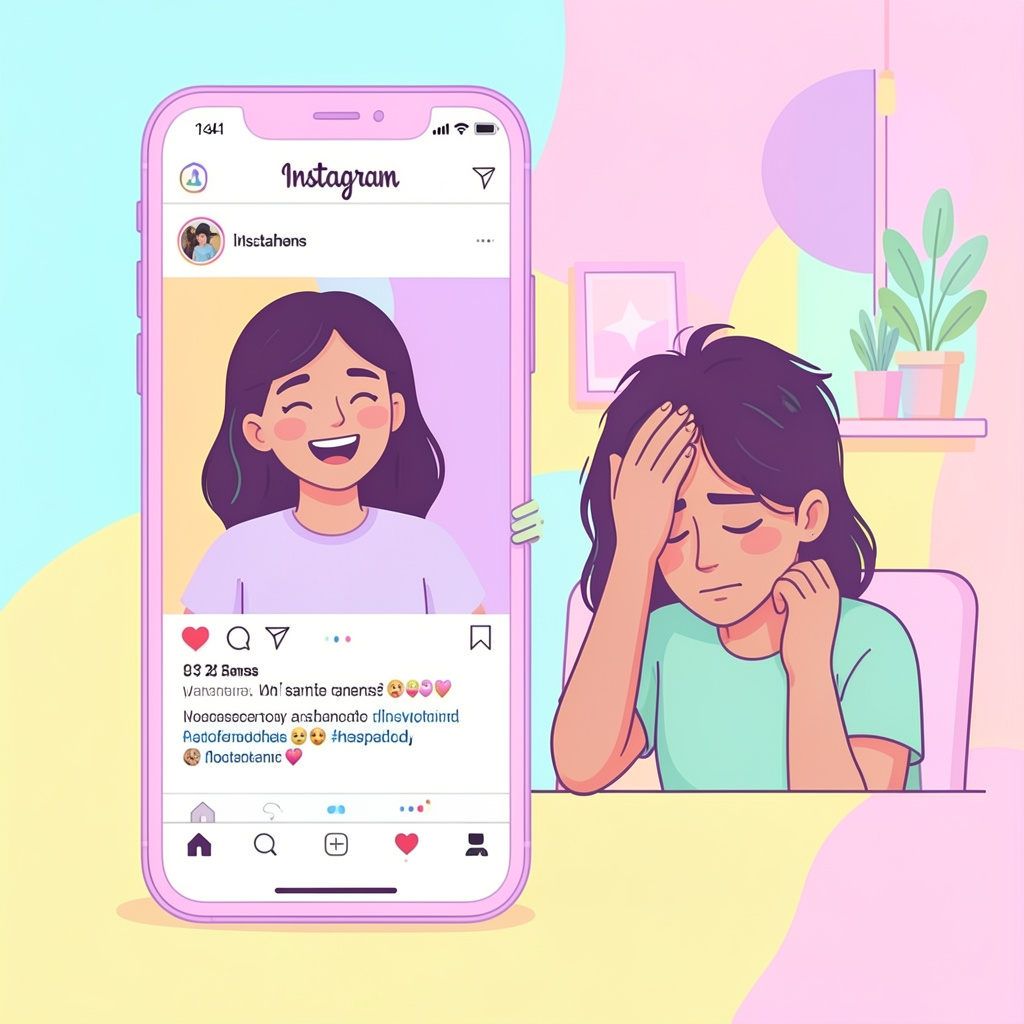
Here is something nobody tells you when you are deep in your feelings at midnight. Every polished post, every glowing announcement, every “life is amazing” caption hides an entire story you never get to see. You see your friend’s engagement photos, but you do not see the two years of heartbreak that came before it. You see the job promotion, but you miss the eighteen months of rejection emails, the nights of doubt, and the quiet crying in bathroom stalls.
Social media makes such moments dangerously simple to forget. People post their victories, not their valleys. They share the wedding, not the couple’s therapy. They announce the business launch, not the credit card debt that funded it.
So the next time someone’s life looks impossibly perfect online, remind yourself of this: a beautiful photo is thirty seconds of someone’s day. It tells you nothing about their 11 p.m. moments, their fears, or what they quietly wrestle with alone.
Your Timeline Is Not Behind

Now, let us talk about the clock in your head. You probably carry a mental checklist that says things like “married by 27, career sorted by 30, house by 32.” Who made that list? Seriously, think about it. Society handed you a template that was never designed with your unique life in mind, and you have been judging yourself against it ever since.
The truth is, there is no universal timeline. There never was. Some people publish their first book at 23. Others write their masterpieces at 56. Some marry young and thrive. Others marry later and love deeper. Some build businesses fresh out of university, while others find their calling after decades in the wrong career. None of these people are ahead or behind. They are simply on their own path, moving at their own pace.
Think about it this way. A mango tree and a pear tree do not grow on the same schedule. Nobody stands over a mango tree saying, “Why are you not a pear yet?” That would be absurd. Yet you do this to yourself every day. You look at someone else’s fruit and cry over your roots, completely forgetting that your season simply has not arrived yet.
The Selective Focus Blind Spot

Your brain does something sneaky when you fall into comparison mode. Psychologists call it the selective focus blind spot. Basically, your mind highlights every area where you feel like you fall short, and then it specifically seeks out people who appear to be doing better in exactly those areas. It conveniently ignores all the evidence that does not support that story.
So, if you feel insecure about your career, your brain zeros in on every friend who just got a big promotion. It completely ignores the friends who are still figuring things out, the ones who hate their jobs, or the ones who gave up their dream to chase a paycheck. Your brain is not showing you reality. It is building a case for your insecurities and presenting it as fact.
Recognizing this pattern changes everything. The moment you catch yourself thinking “everyone else has it together,” stop and ask a simple question: “Am I actually seeing the full picture, or is my brain being selective right now?” Most times, it is being very, very selective.
How Social Media Fuels the Fire

Let us be honest about social media because it deserves its own conversation. Platforms like Instagram, TikTok, and Facebook do not just show you life updates. They engineer a constant stream of comparison triggers. Algorithms push content that keeps you scrolling, and nothing keeps people scrolling quite like posts that make them feel something.
Research confirms that frequent upward social comparison on social media platforms strongly associates with greater depressive symptoms, especially among young people. A 2024 study in the Saudi Journal of Psychology found that social media-based social comparison links directly to lower self-esteem, reduced self-worth, and increased social anxiety. The more time you spend comparing your everyday life to someone else’s curated content, the more disconnected you grow from your own worth.
This does not mean you must delete every app and disappear from the internet. It means you need to get intentional about how you consume content. Unfollow accounts that consistently make you feel small. Mute timelines that trigger comparison spirals. Follow creators and communities that actually inspire and lift you up. Your feed is your environment, and your environment shapes your mindset more than you realize.
Practical Ways to Reclaim Your Peace

Here is where we get into the good stuff. Knowing why you compare is powerful, but action is what creates real change. These strategies genuinely work.
- Audit your social media regularly. Go through the accounts you follow and ask yourself honestly: Does this account leave me feeling inspired or inadequate? Unfollow without guilt. Your mental health outranks anyone’s follower count.
- Celebrate your own wins loudly. Most people who compare themselves to others rarely stop to acknowledge how far they have come. Start keeping a wins journal. Write down every small victory, every step forward, every moment you showed up even when it was hard. Your progress deserves applause, too.
- Redirect comparison into curiosity. Instead of feeling bitter when a friend achieves something, get curious. Ask them how they did it. What did they learn? What would they do differently? Turn comparison from a weapon into a teacher. This shift is genuinely transformational.
- Define your own version of success. Sit down and write out what a meaningful life looks like to you specifically. Not what your parents expect. Not what society shows on TV. What do you actually want? When you live by your own definition of success, other people’s timelines stop feeling threatening.
- Practice gratitude with intention. Gratitude is not just a buzzword. Science backs it up. When you actively focus on what you already have, your brain rewires itself to seek out more of what is good in your life instead of defaulting to what is missing.
- Talk to someone you trust. The Albert Ellis Institute notes that comparing yourself to others negates your own road entirely. A good therapist, mentor, or even a deeply honest friend can help you see your life more clearly when comparison clouds your perspective.
What Happens When You Stop Comparing

Here is the beautiful thing that nobody talks about enough. When you genuinely stop measuring your journey against someone else’s, your entire energy shifts. You stop sprinting toward someone else’s finish line and start actually enjoying your own race. You notice opportunities you were too distracted to see before. Then, show up more fully in relationships because you stop feeling secretly competitive. You sleep better, breathe better, and laugh more genuinely.
The Headington Institute notes that therapists consistently encourage clients to step away from constant self-comparison because it traps people in cycles that actually prevent the growth they desperately want. You cannot build your own story while you keep reading someone else’s. The two simply do not go together.
Your friends’ wins do not shrink yours. Their growth does not steal your potential. Someone else blooming does not mean your garden has failed. There is enough sun in the sky for every single flower to grow in its own time, in its own way, and in its own beautiful season.
The Only Timeline That Matters

At the end of the day, the only timeline that truly matters is the one you build with intention, purpose, and self-compassion. You did not come into this world to replicate someone else’s journey, neither did you come here with a specific set of gifts, experiences, scars, and dreams that belong entirely to you. Nobody else can live your story, or have your combination of depth and strength and potential.
So the next time you feel the urge to measure where you are against where someone else stands, take a breath. Place your hand on your chest. Feel your own heartbeat. That rhythm is yours. That pulse carries your history, your healing, and your future all at once. Trust it completely.
Your timeline is not behind, not broken, not lesser. It is simply yours, and that is more than enough.
Recommended Reading: Signs Your Successful Friends Are Actually Toxic for Your Growth